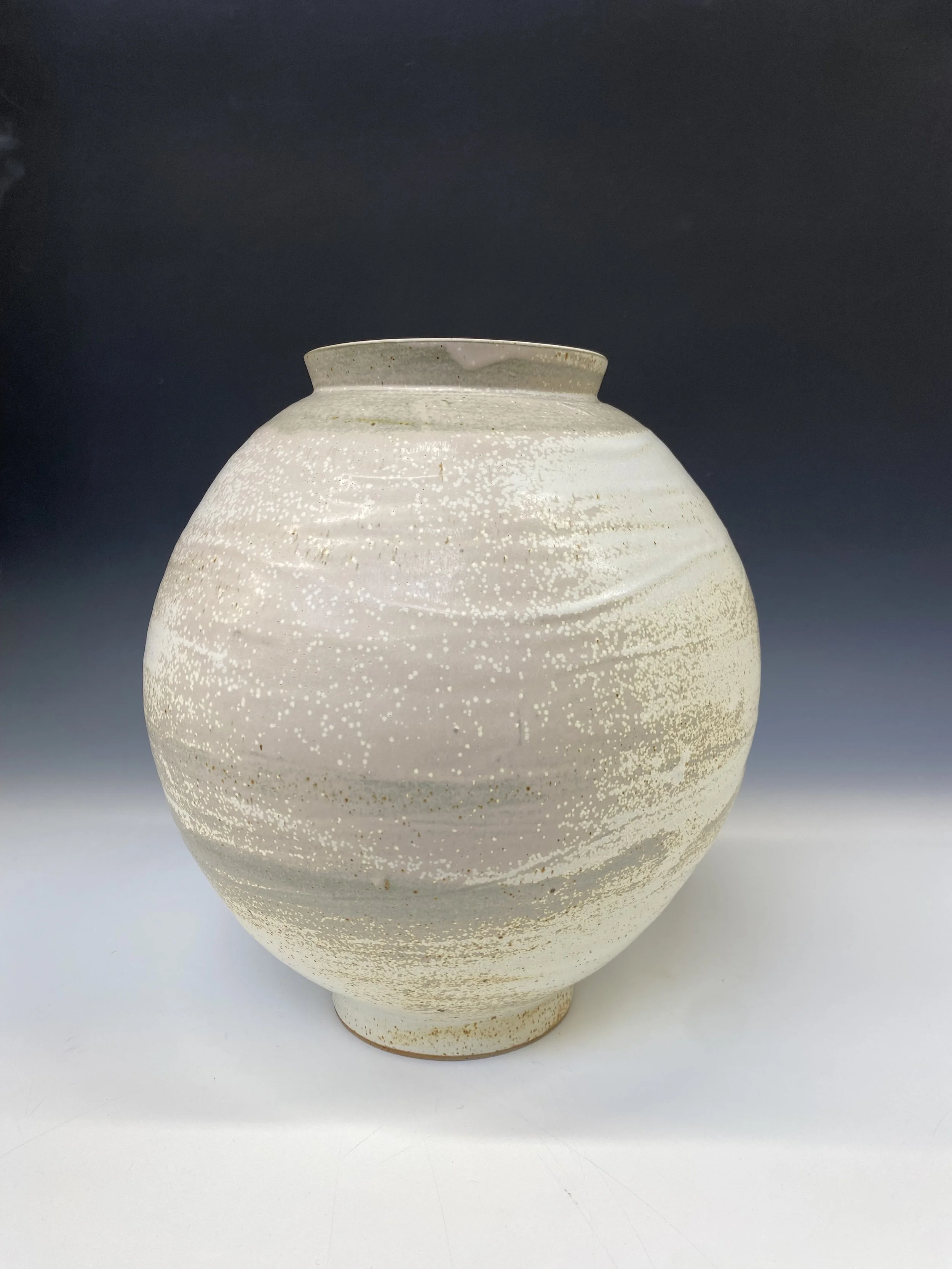
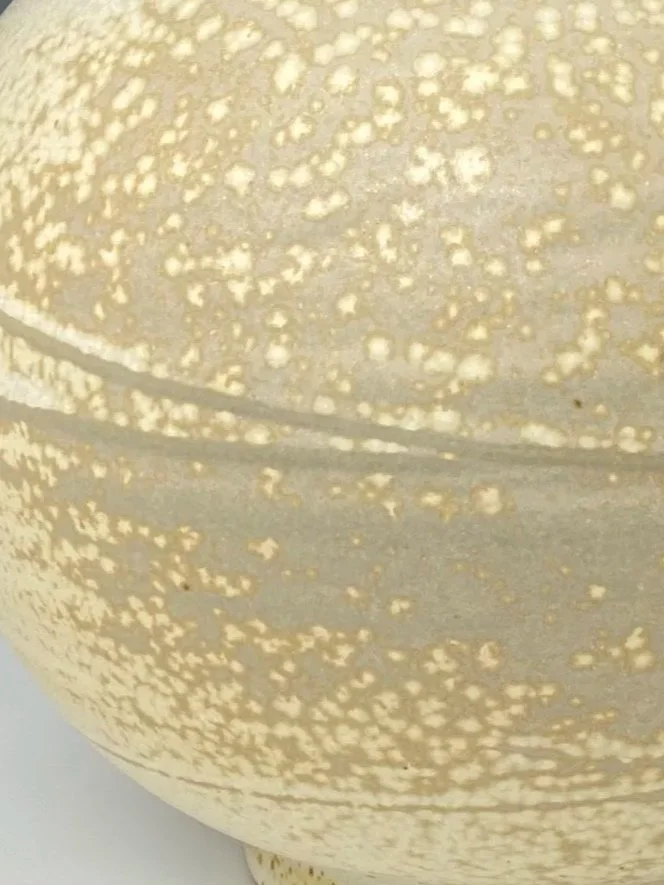
Diaspora, 2026 | Pink surface detail Iron-bearing white stoneware, white slip, matt Titanium White glaze, reduction fired at 1280°C. | 30 × 30 × 33 cm
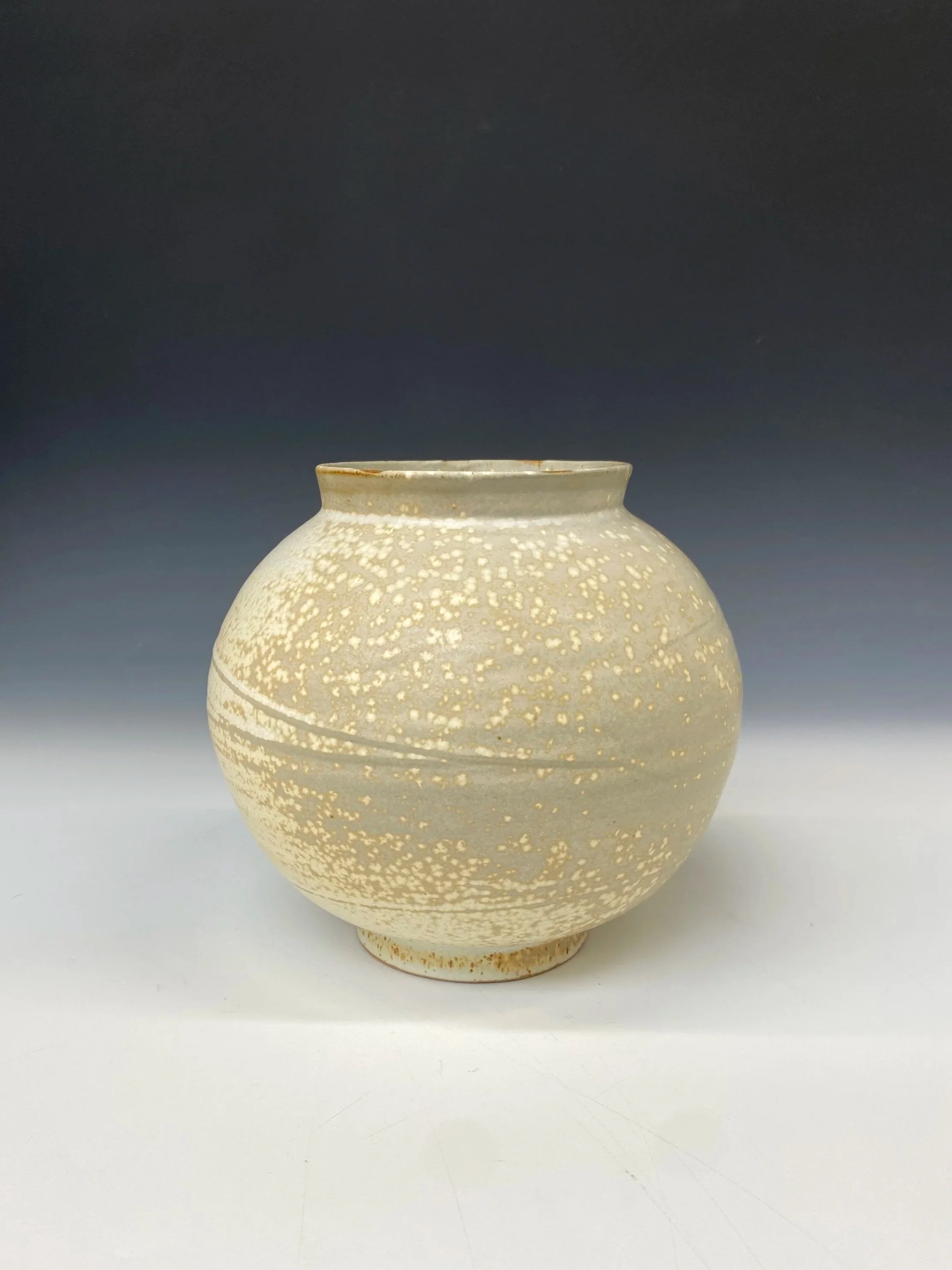
Diaspora, 2026 | Iron-bearing white stoneware, white slip, matt Titanium White glaze, reduction fired at 1280°C. | 20.5 × 20.5 × 19 cm
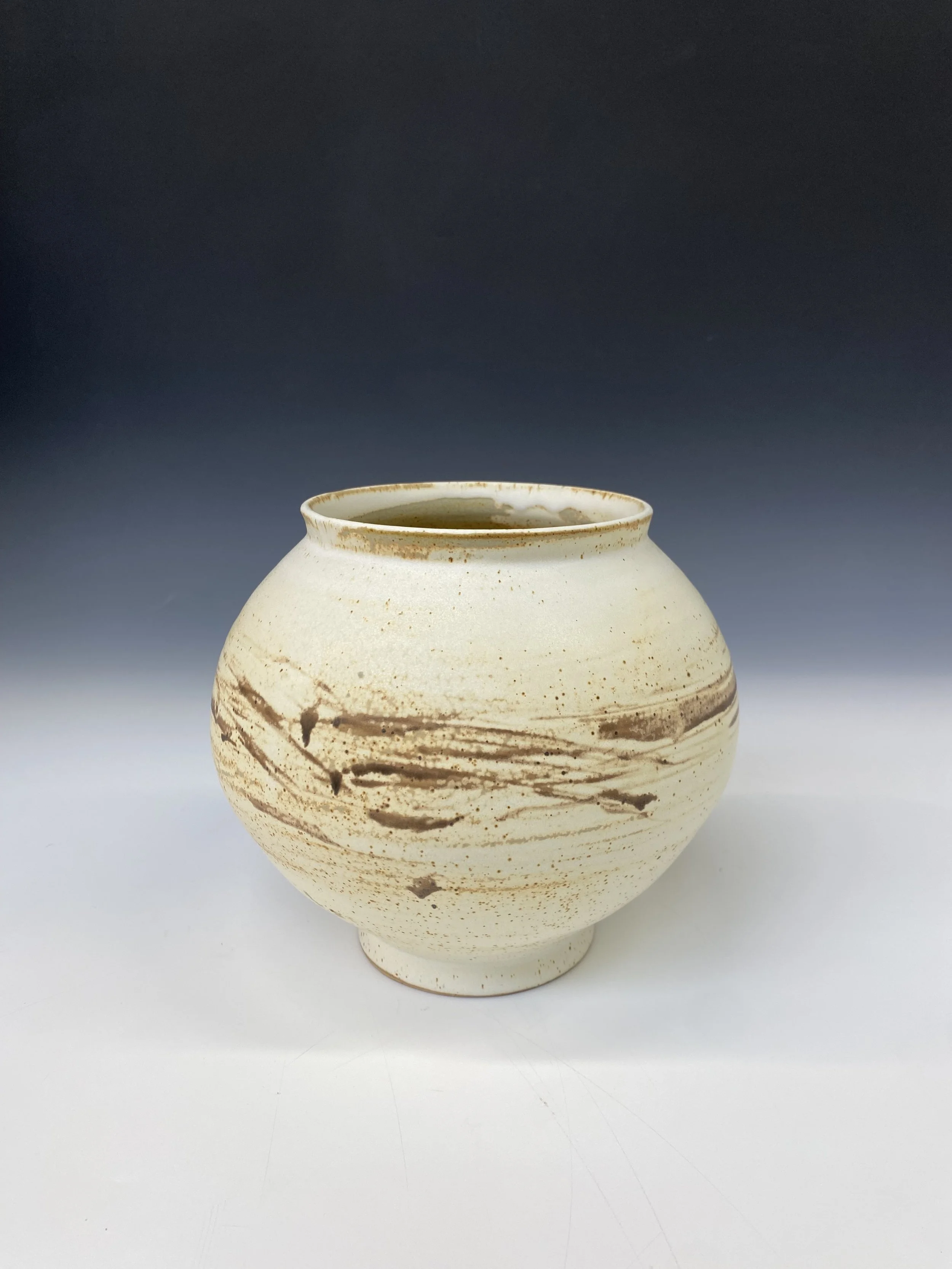
Diaspora, 2026 | Iron-bearing white stoneware, white slip, Manganese oxide, matt Titanium White glaze, reduction fired at 1280°C. | 22 × 22 × 19 cm
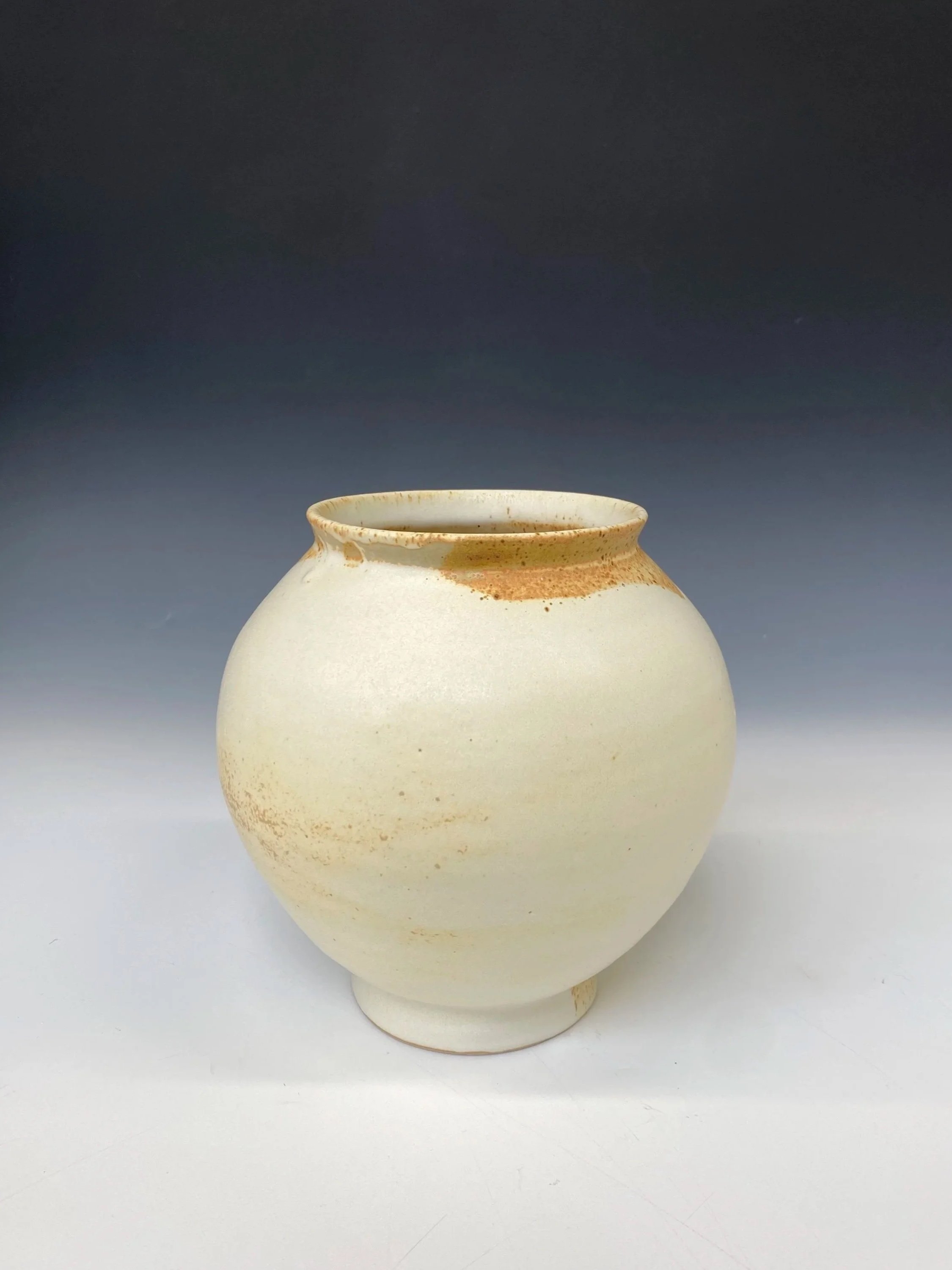
Diaspora, 2026 | Iron-bearing white stoneware, white slip, matt Titanium White glaze, reduction fired at 1280°C. | 19.5 × 19.5 × 19.5 cm
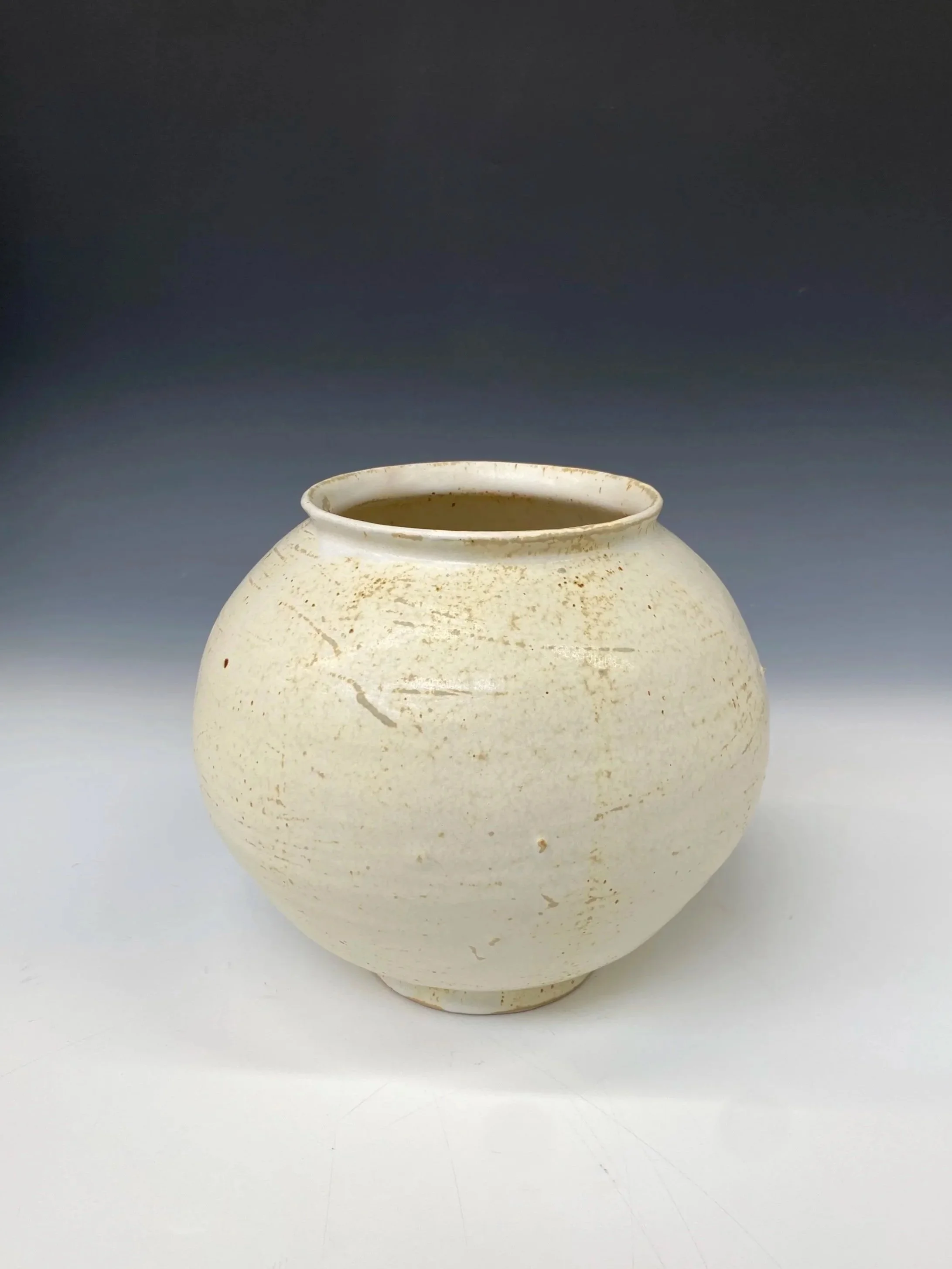
Diaspora, 2026 | Iron-bearing white stoneware, white slip, matt Titanium White glaze, reduction fired at 1280°C. | 23 × 23 × 20.5 cm
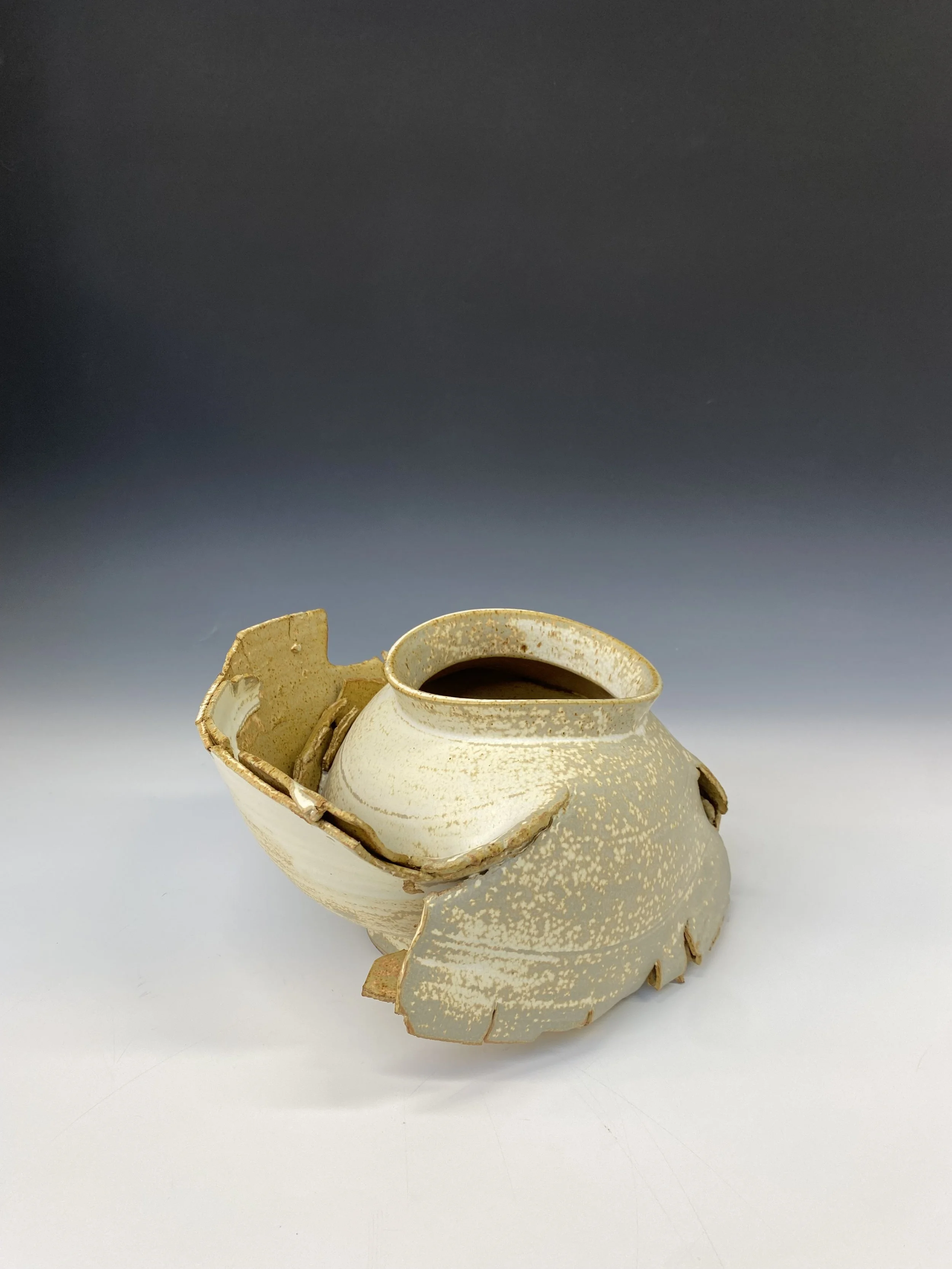
Diaspora, 2026 | Iron-bearing white stoneware, white slip, matt Titanium White glaze, reduction fired at 1280°C. | 33 × 32 × 18.5 cm
Diaspora
On Whiteness, Movement and Transformation
During my earlier years as a ceramic artist in Korea, I worked with a relatively wide range of colours. Colour was an important part of my visual language, and I enjoyed exploring different possibilities through form and surface.
However, since moving to the UK, my work has undergone a noticeable change. I have become increasingly drawn to the forms of traditional Korean vessels, particularly the moon jar, while gradually moving away from vivid colours towards shades of white and the more natural tones that emerge from clay and firing.
This was not entirely a conscious decision. Things that had once felt so familiar in Korea, and which I had rarely thought to question, began to take on a different significance after I moved away. Living in an unfamiliar environment made me look again at the forms and colours I had grown up with. Perhaps it was the distance from home that allowed me to recognise how deeply they were connected to my own sense of identity.
For me, white has come to mean more than simply a colour.
Growing up in Korea, white was something I encountered naturally in everyday life. It has a long presence in Korean cultural and aesthetic traditions, particularly in porcelain and moon jars. Their quiet, understated beauty had always felt familiar to me.
Yet I no longer see white as a single, pure or perfect state.
In ceramics, white is never truly one uniform colour. Even when the same slip and glaze are used, the results can vary depending on the composition of the clay, the atmosphere inside the kiln and the effects of fire. Some whites appear warm, others cool. They may shift towards grey or yellow, or occasionally develop into colours that were never anticipated.
These variations in whiteness have led me to think differently about identity. Even when we share the same cultural roots, we may become different people depending on the environments we inhabit and the relationships we form. What interests me is not the idea of one perfect white, but the many different whites that emerge under different conditions.
Diaspora extends my earlier exploration of difference and relationships in Coalescence, moving from form into material, surface and colour.
While Coalescence focused on how two distinct parts can come together to form a single vessel without losing their individual differences, Diaspora considers how materials themselves change through movement, contact and interaction.
For this series, I made five vessels using an iron-bearing white clay, applying the same white slip and glaze to each. Yet when they emerged from the kiln, each had developed its own distinct colour and surface.
One vessel, in particular, had taken on an unexpected pink tone. During firing, copper-bearing material from the glaze of another piece had volatilised and travelled through the kiln atmosphere, reacting with the surface of the jar and altering its colour.
I was fascinated by this accidental transformation.
Something invisible had moved from its original location to another, encountered an unfamiliar surface and left a trace of its presence. Through this encounter, a new colour had emerged — something that had not existed before.
This process reminded me of the experience of diaspora.
For me, diaspora is not simply about leaving one's homeland and living in another country. It is also about carrying memories and cultural experiences into a new environment, forming relationships with different cultures and continually reshaping one's sense of identity.
Just as material travels through the kiln and creates an unexpected colour when it encounters a new surface, I too have carried memories and cultural experiences from Korea into my life in the UK. The people I have met, the experiences of everyday life and the differences in cultural values and ways of living have all influenced me. At the same time, I have left traces of my own presence within these relationships.
I do not see this transformation simply as one culture being absorbed into another. Just as a material responds to new conditions and develops a different colour, identity can also change and expand through new experiences without necessarily erasing what came before.
Of course, these changes are not always intentional or predictable. Adapting to unfamiliar surroundings can involve tension and imbalance, and unexpected encounters may alter us in ways we could never have anticipated.
Yet I believe it is within this uncertainty and unpredictability that new possibilities can emerge.
For me, the vessels in Diaspora are not simply studies of variations in colour. They are the results of materials moving, encountering unfamiliar conditions and being transformed, while retaining the traces of those encounters.
And within these subtle differences in colour and surface, there is also something of my own story — of leaving Korea, building a life in the UK, and continuing to change along the way.