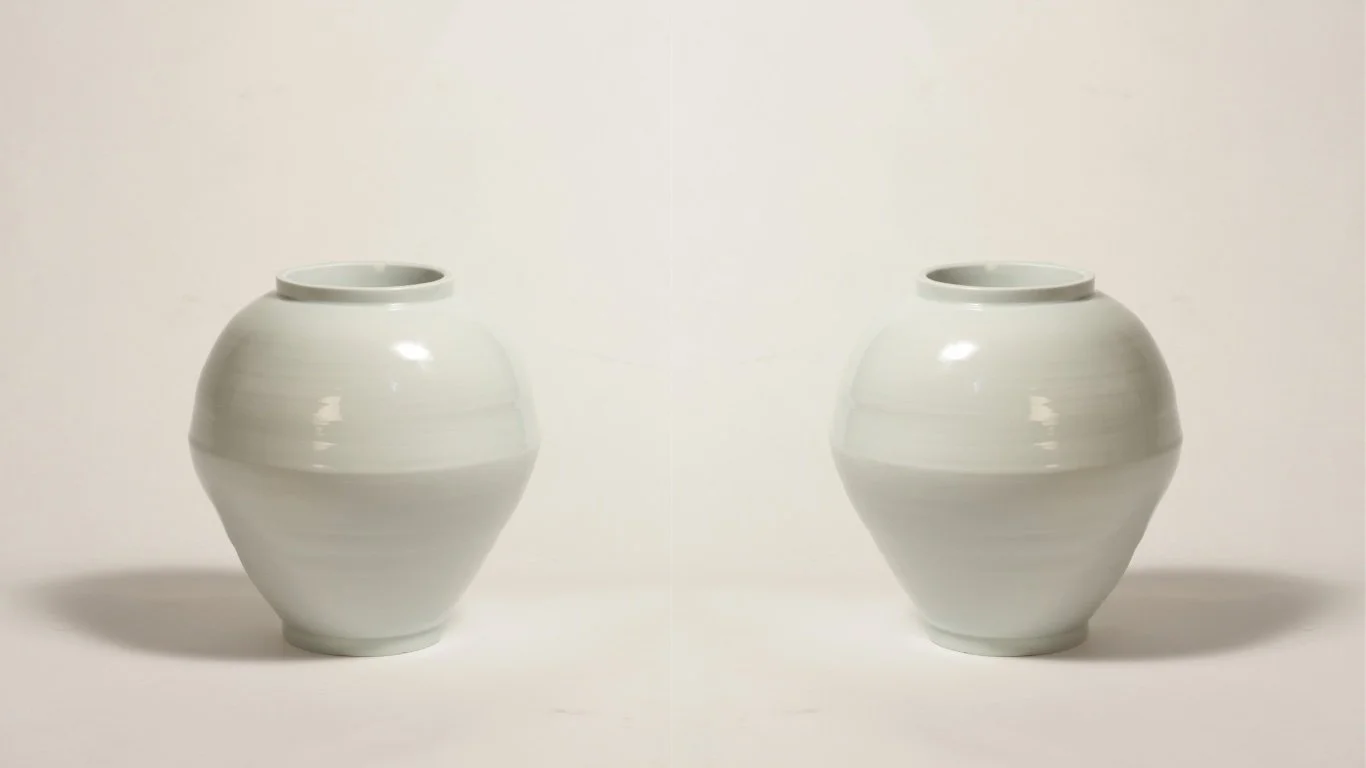
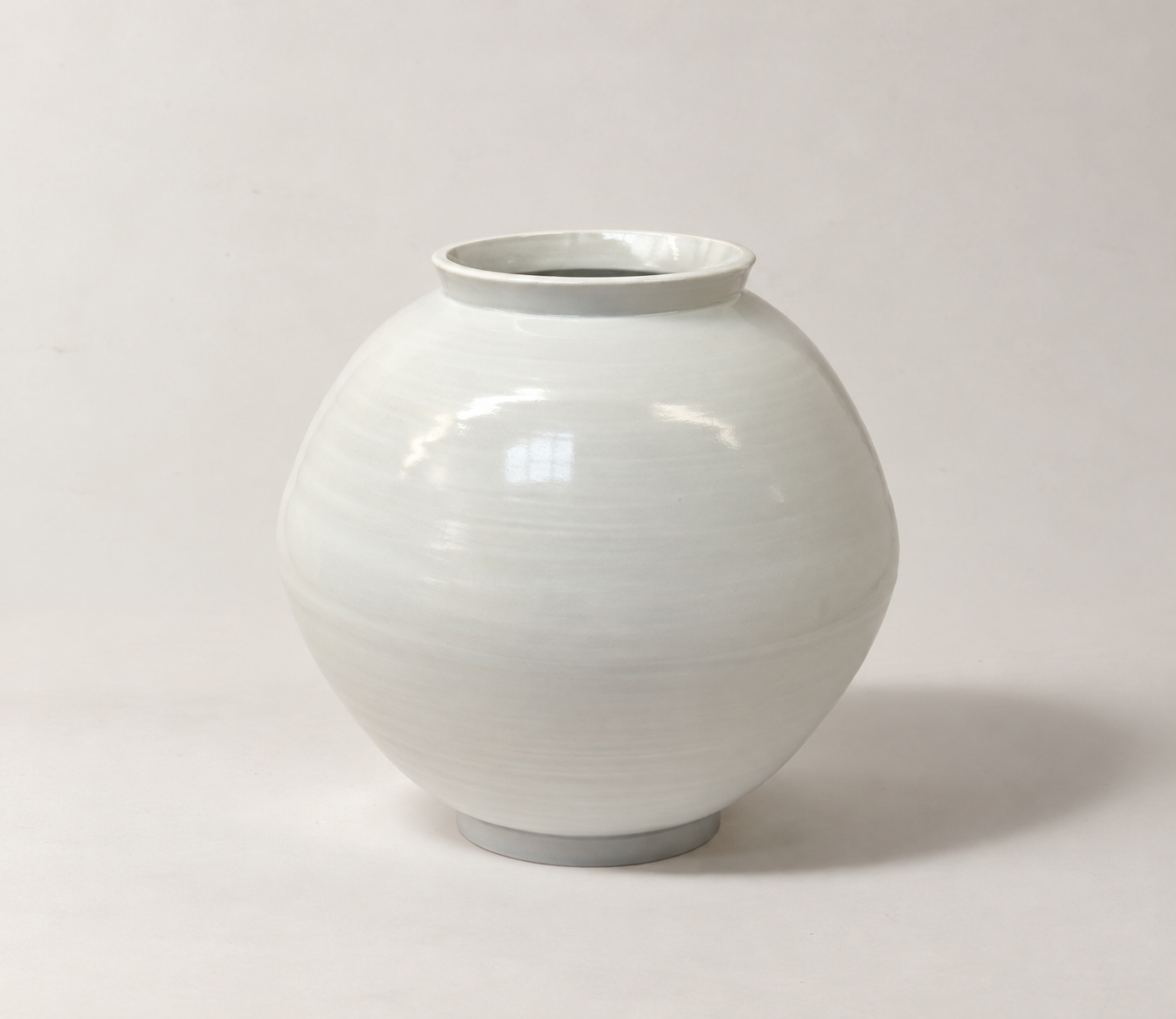
Coalescence 2006 | Wheel-thrown porcelain, transparent glaze, reduction-fired to 1280°C | 33 × 33 × 32 cm
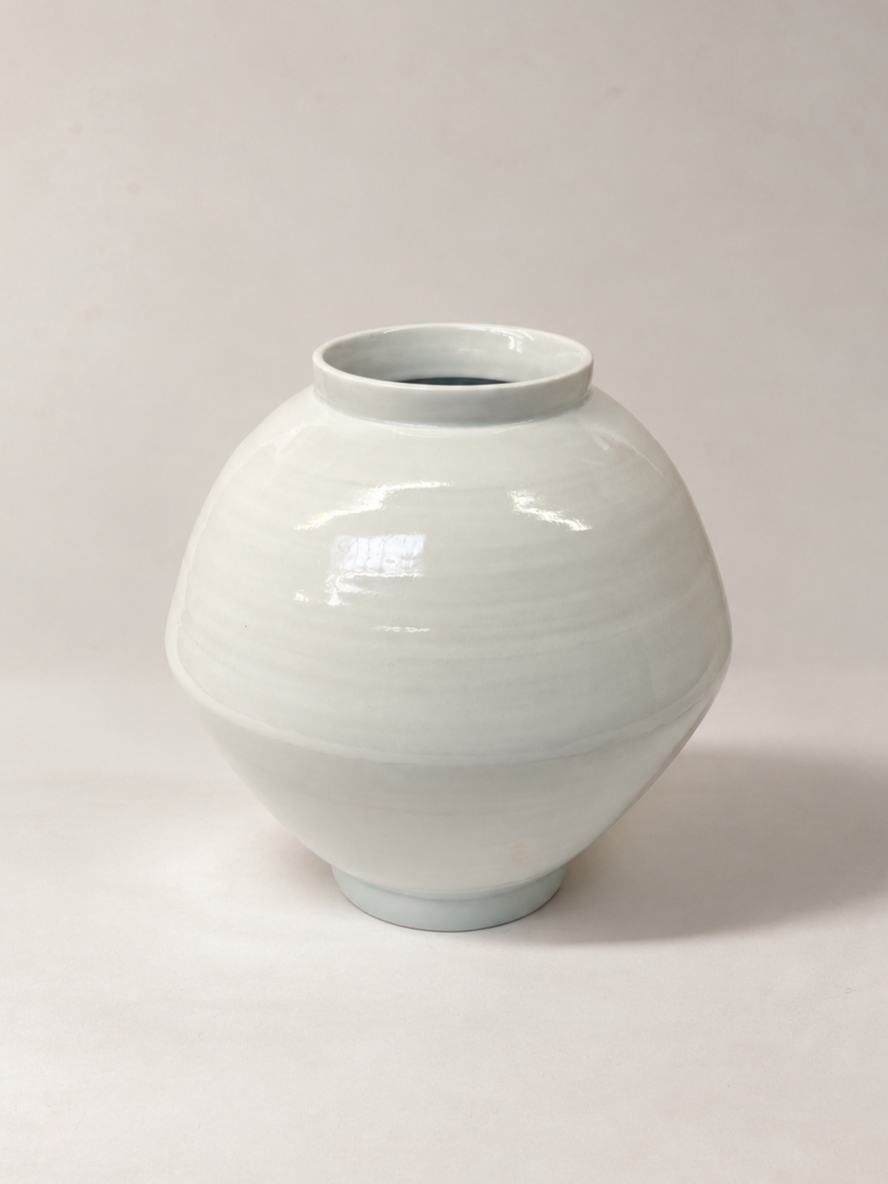
Coalescence 2006 | Wheel-thrown porcelain, transparent glaze, reduction-fired to 1280°C | 32 × 32 × 32 cm
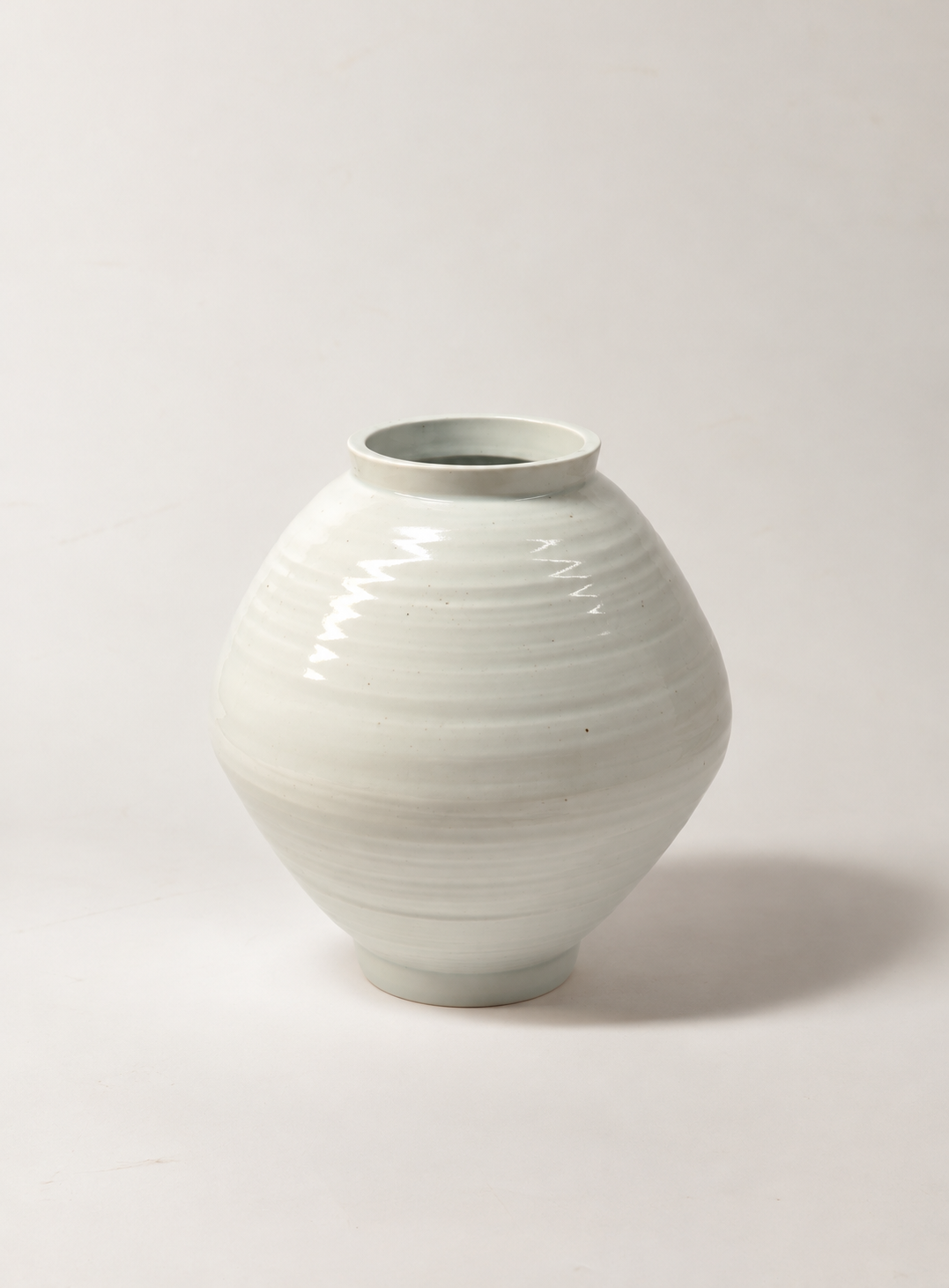
Coalescence 2006 | Wheel-thrown porcelain, transparent glaze, reduction-fired to 1280°C | 32 × 32 × 32 cm
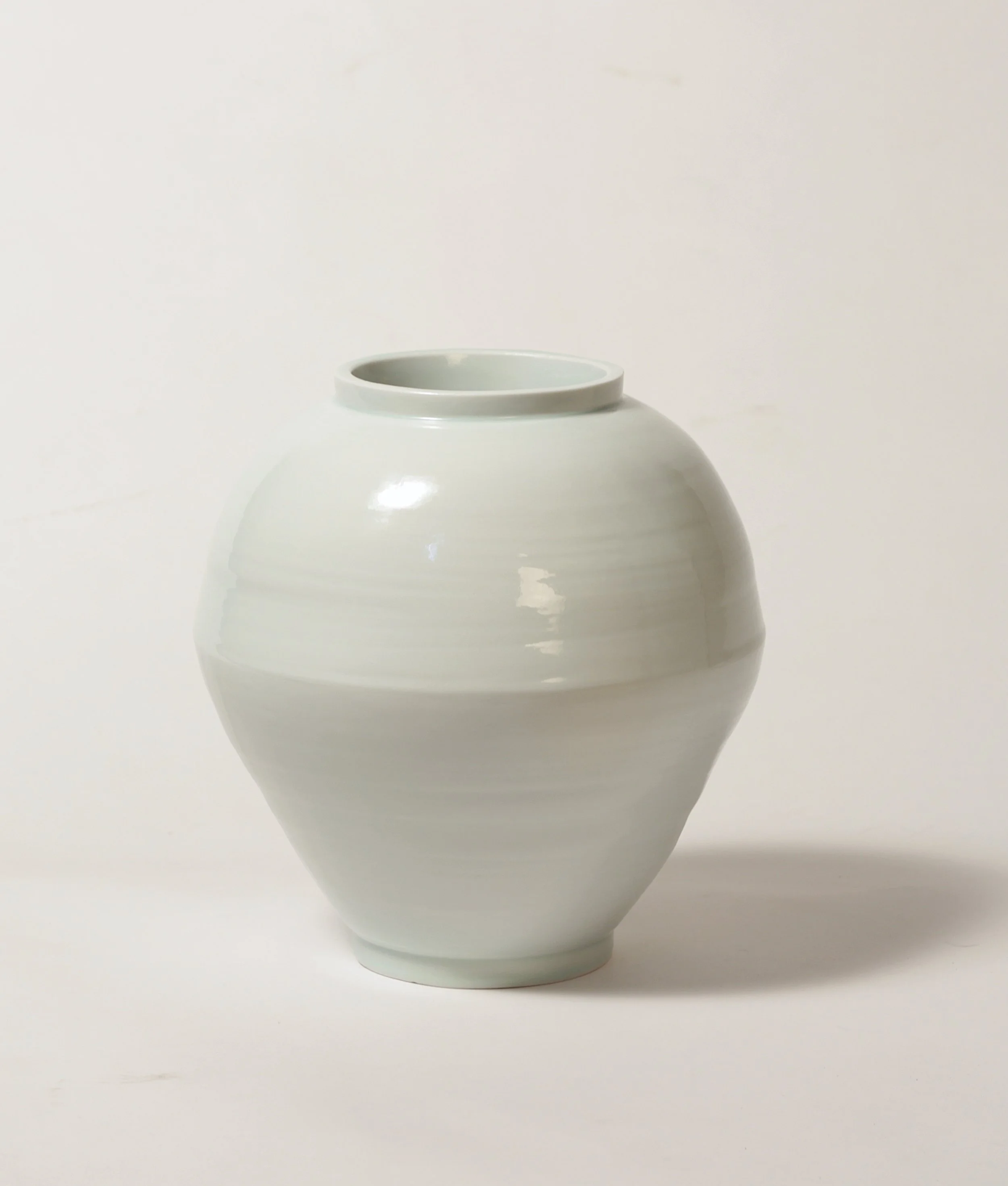
Coalescence 2006 | Wheel-thrown porcelain, transparent glaze, reduction-fired to 1280°C | 32 × 32 × 32 cm
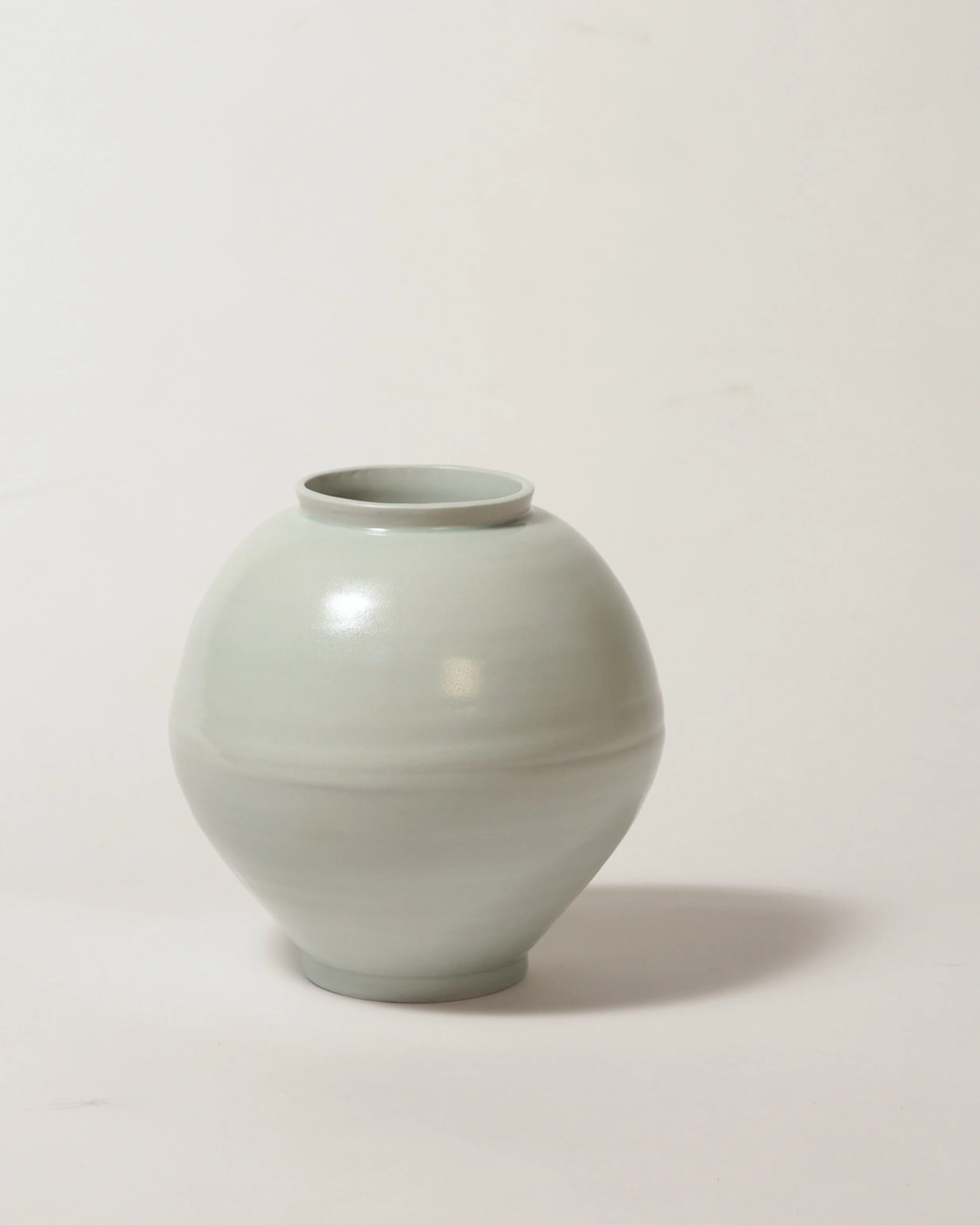
Coalescence 2006 | Wheel-thrown porcelain, transparent glaze, reduction-fired to 1280°C | 26 × 26 × 25 cm
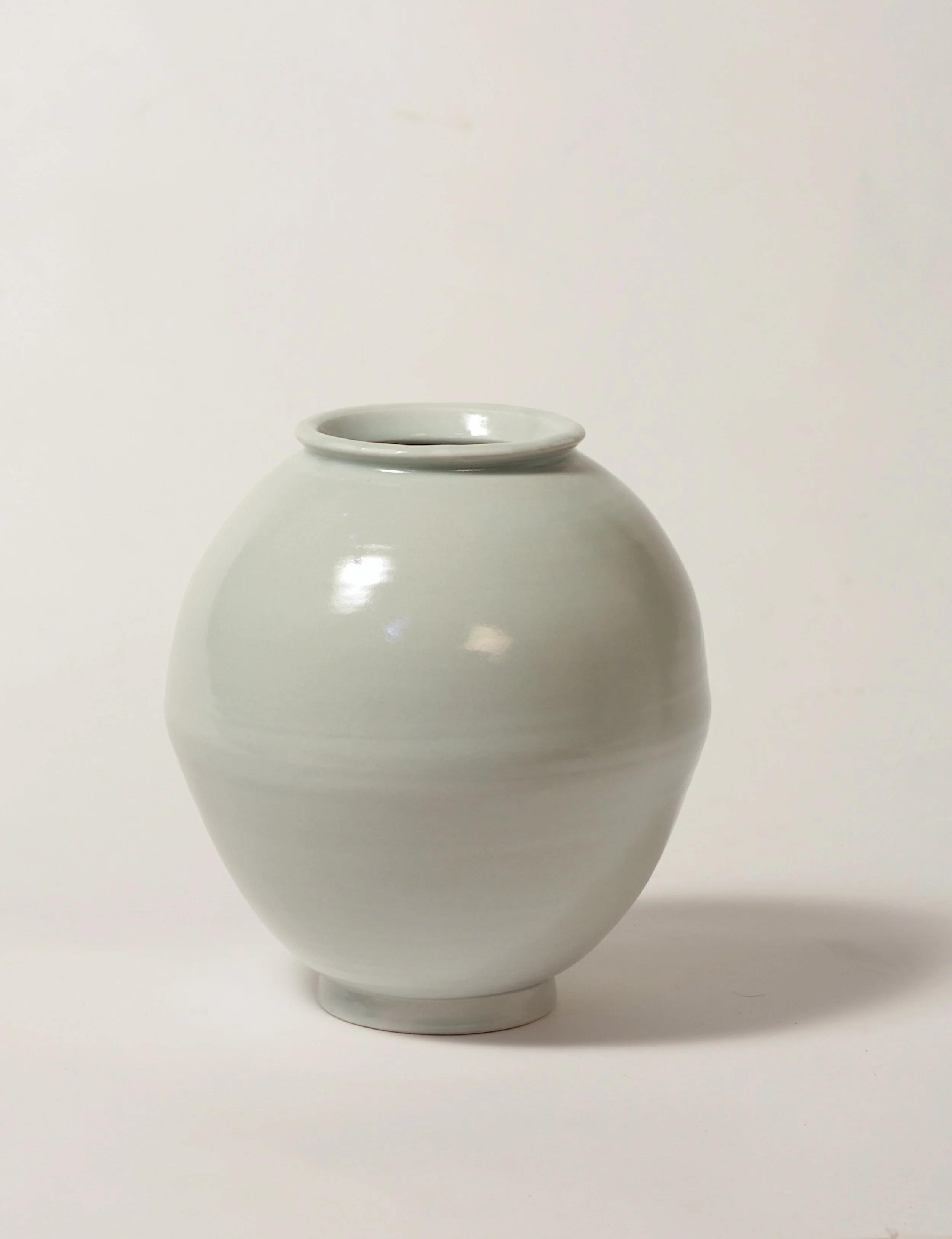
Coalescence 2006 | Wheel-thrown porcelain, transparent glaze, reduction-fired to 1280°C | 31 × 31 × 32 cm
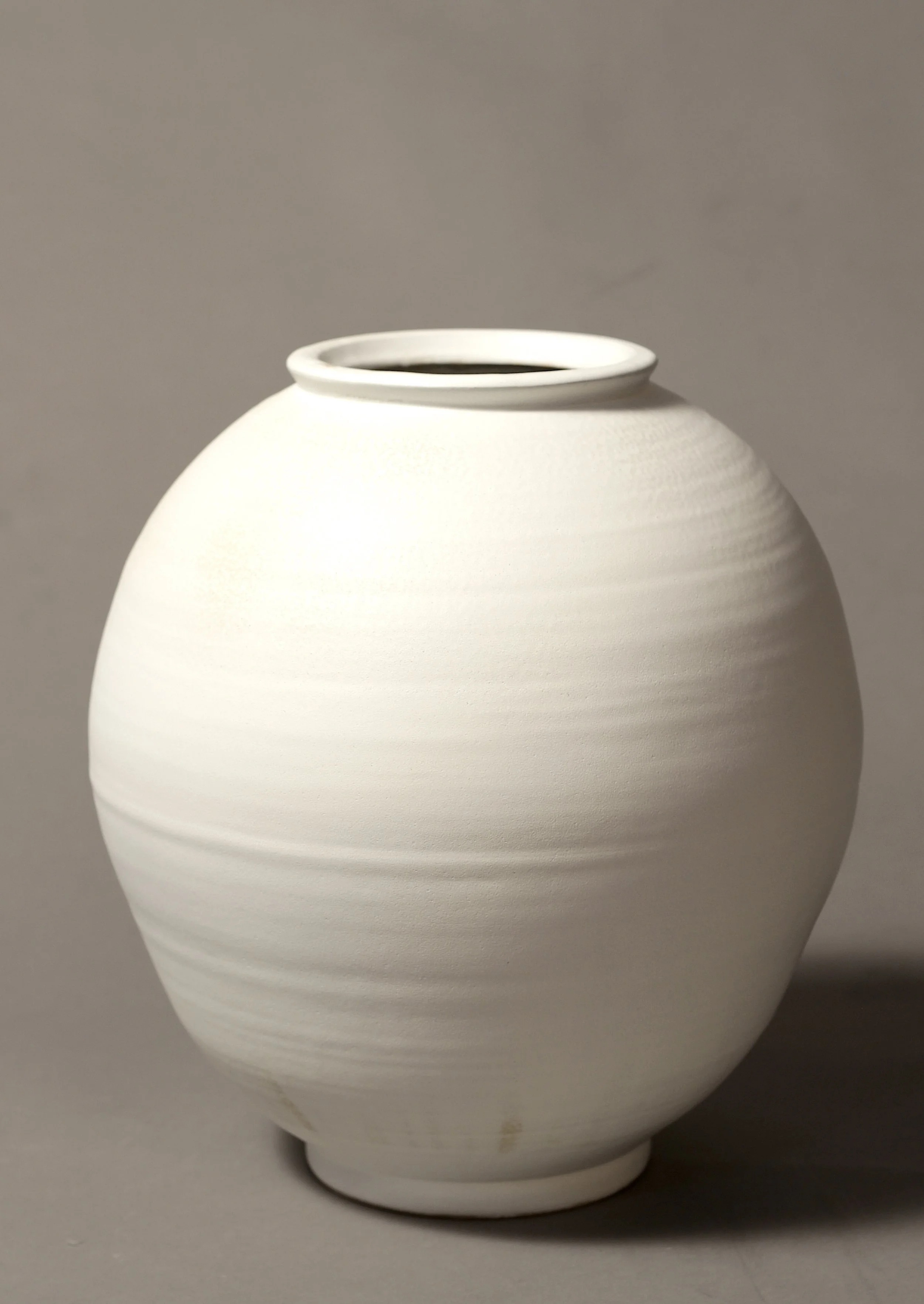
Coalescence 2006 | Wheel-thrown white stoneware, matt white glaze, oxidation-fired at 1260°C | 33 × 33 × 35 cm
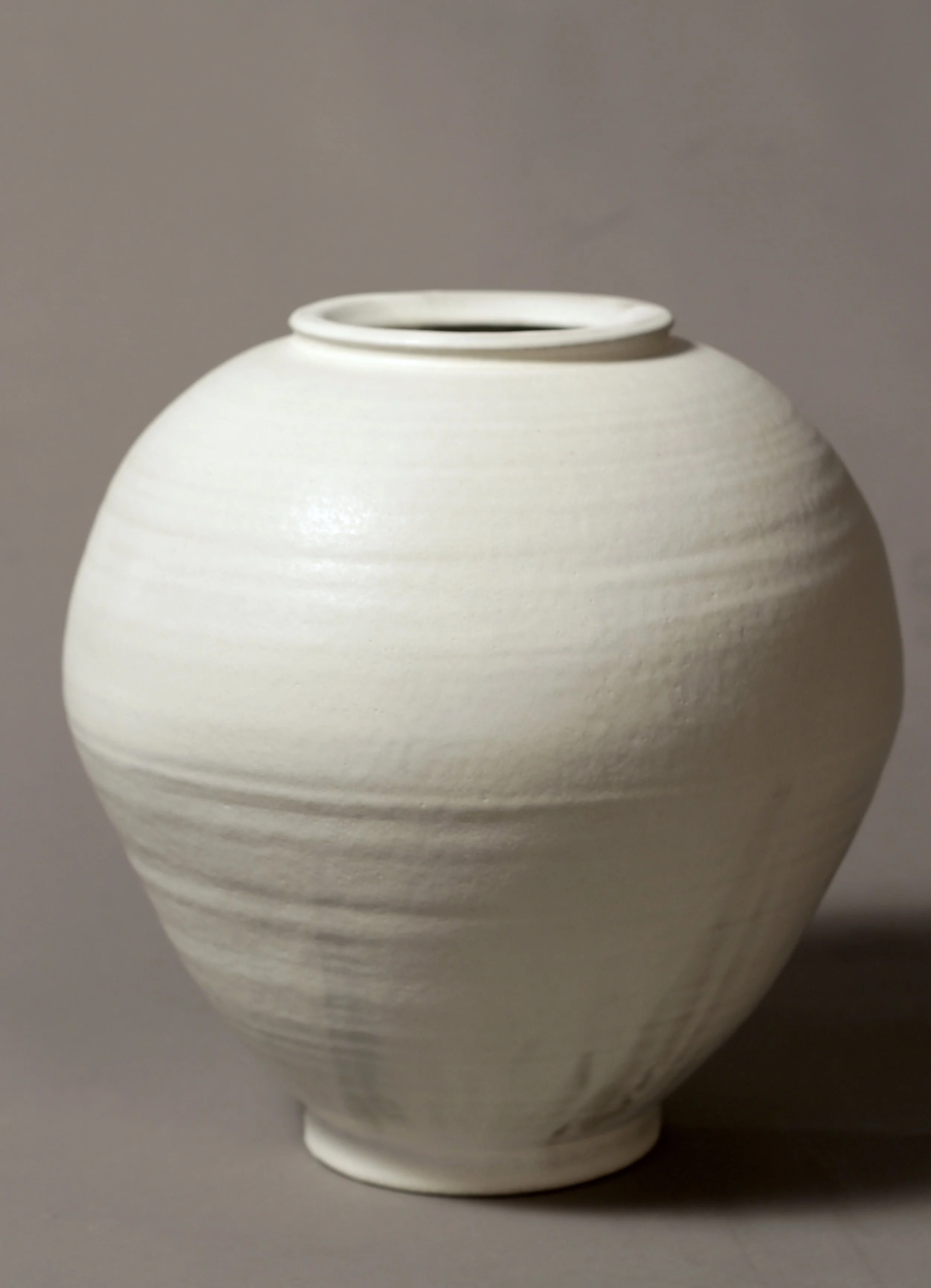
Coalescence 2006 | Wheel-thrown white stoneware, matt white glaze, oxidation-fired at 1260°C | 35 × 35 × 37 cm
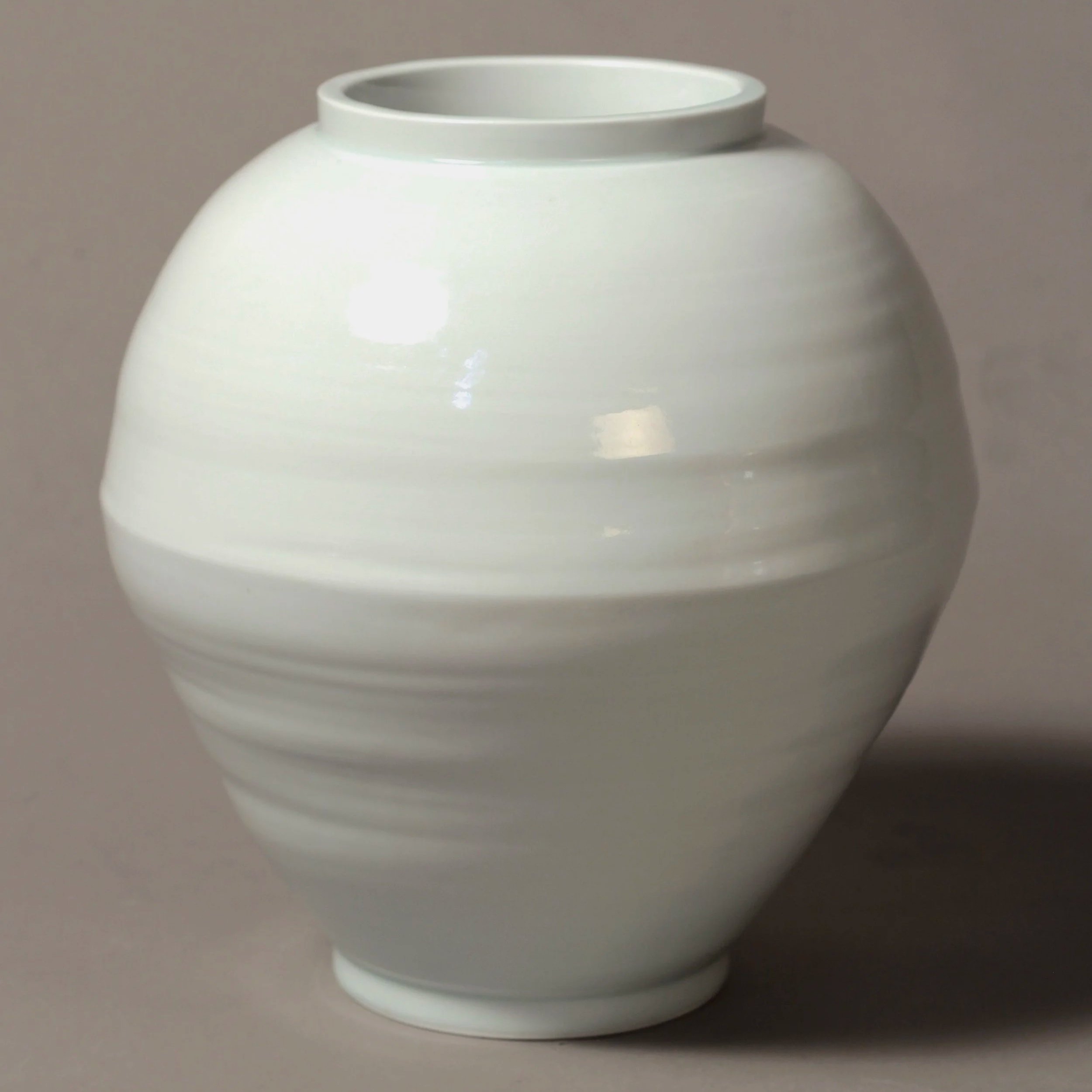
Coalescence
On Difference, Relationships and Coexistence
Since leaving Korea and settling in the UK, I have found myself looking at things I once took for granted from a different perspective. Being away from familiar language, culture and everyday surroundings has made me reflect more deeply on where I come from and what has shaped my sense of identity.
It was through this experience that I began to rediscover the traditional Korean moon jar.
My initial attraction to the moon jar was also deeply personal. One evening, while looking at the moon in the night sky, I was reminded of the moon I used to see in Korea. There was something comforting about the thought that, although I was living in a different place, I was still looking at the same moon. The quiet, rounded form of the moon jar gradually became connected to these memories of home.
However, what drew me more deeply to the moon jar was the way it is made.
In the traditional Korean up-daji technique, two hemispheres are thrown separately on the potter's wheel and then joined together to form a single vessel. The two halves are never perfectly identical. There are subtle differences in their size and curvature, and a seam remains where they meet. As a result, the finished moon jar is not a perfect sphere but carries a gentle asymmetry in its silhouette.
I found a particular beauty in this imperfection.
Two different forms do not need to become identical in order to create a single vessel. They retain their individual differences while coming together to establish a new balance. For me, the seam of the moon jar is more than a trace of its making. It represents a boundary where two distinct entities meet and a relationship begins to take shape.
Living as a migrant in the UK, this structure has taken on a personal significance. In everyday life, where different cultures, values and ways of living meet, I have come to think that difference is not necessarily something to overcome or erase. Perhaps coexistence is not about becoming the same, but about recognising our differences and finding ways to form relationships through them.
Through the form of the moon jar, I explore these ideas.
In my work, I minimise decoration and allow the natural whiteness of porcelain and the traces of wheel-throwing to remain visible. This is not an attempt to create a perfectly simple or flawless form. Rather, I want to reveal the subtle differences, imbalances and traces of connection that exist within it.
The process of working on the potter's wheel is equally important to me. As I centre the clay and gradually shape it with my hands, the form responds continuously to pressure, movement and the condition of the material. However carefully I repeat the same process, no two forms are ever completely identical. Within this repetition and variation, I find something that reflects the nature of human relationships and everyday life.
Coalescence is an exploration of how two distinct entities come together to form something whole.
Yet becoming one does not necessarily mean that their differences disappear. Rather, it suggests the possibility of existing together while retaining what makes each distinct.
Through the seams and subtle asymmetry of the moon jar, I hope to express a sense of balance and coexistence that emerges not from perfect unity, but from difference itself.